Start-Stop Protocol
In the 1960s and 1970s, IBM used to call asynchronous traffic by the name Start-Stop Protocol. This is because there are not always bits present in the communications link.
In such a protocol, the data is divided into bytes. These bytes may be of any length, normally between four and eight bits, but all will be the same size.
Each byte is followed by one, one-and-a-half or two stop bits. These are used as an inter-byte filler and allow the receiving modem to re-synchronise its bit timing. This is especially important when one byte immediately follows another. Following a gap in transmission, the receiving modem is able to re-establish bit synchronisation at the moment it receives it receives the first bit of next byte.
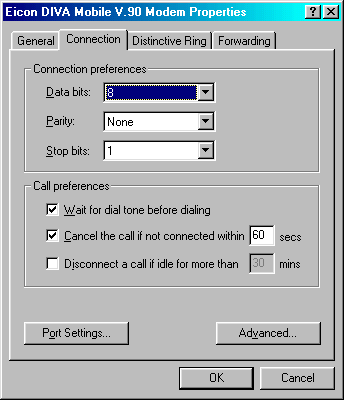
This why Microsoft provide this configuration panel for Windows 98:
This means that an asynchronous channel has three states:
By contrast a synchronous channel has only two states: