Step
Action
1
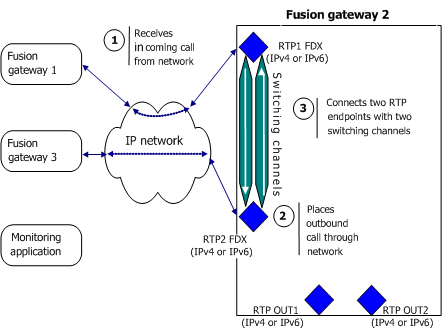
A gateway application (Fusion gateway 2) receives an incoming call through an RTP IPv4 or IPv6 duplex endpoint (shown as RTP1 in the example).
2
The gateway places an outgoing call through another RTP IPv4 or IPv6 duplex endpoint (shown as RTP2 in the example).
3
If the gateway is successful in placing the outbound call, it connects the incoming call (RTP1) with the outgoing call (RTP2) using two simplex RTP switching channels.
4
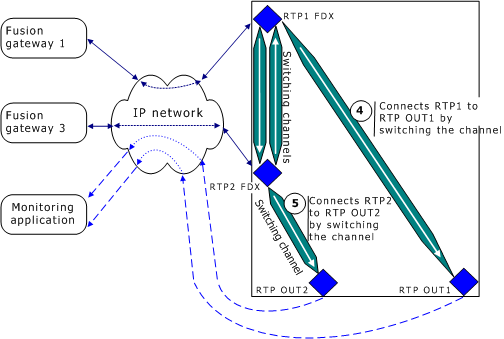
The gateway connects the voice data received through RTP1 to an RTP IPv4 or IPv6 simplex send endpoint (shown as RTP OUT1 in the example) using a RTP switching channel.
5
The gateway connects the voice data received through RTP2 to an RTP IPv4 or IPv6 simplex send endpoint (shown as RTP OUT2 in the example) using a RTP switching channel.