This topic contains the following CAS mode switching information:
CG 6565 boards terminate CAS signaling on local T1 and E1 trunks. In CAS mode, CG 6565 boards support signaling streams on the DSPs and the framers. These streams are provided for backward compatibility with applications that switch signaling streams.
The CG 6565 switch model supports full duplex connections between DSP signaling and trunk signaling. However, the CG 6565 board supports no other CAS signaling connections.
CG 6565 boards do not support DSP-to-DSP signaling connections (such as local stream:timeslot 66:0 to local stream:timeslot 67:4), trunk-to-trunk signaling connections (such as local stream:timeslot 2:0 to local stream:timeslot 7:3), or signaling-to-bus connections (such as local stream:timeslot 2:0 to MVIP stream:timeslot 0:0 or local stream:timeslot 66:0 to MVIP stream:timeslot 0:0).
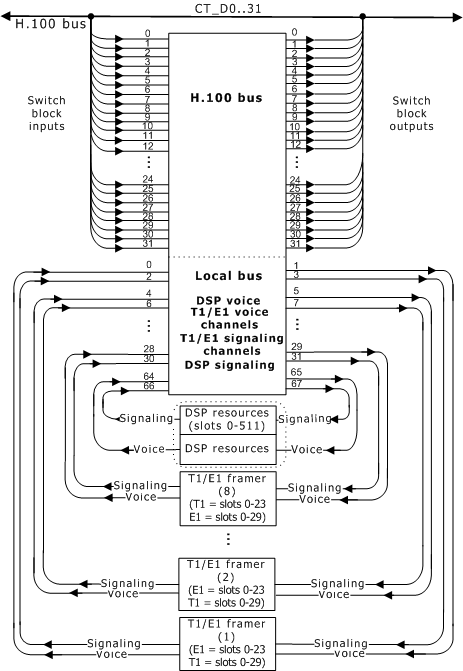
The following illustration shows the CG 6565 switching model in CAS mode:
The following tables list the specific use of each stream in the CG 6565 CAS switching model:
H.100 bus |
Streams 0..31, timeslots 0..127 (Streams clocked at 8 MHz) |
Trunk voice information (T1 trunks) |
Trunk 1: Streams 0 and 1 Trunk 2: Streams 4 and 5 Trunk 3: Streams 8 and 9 Trunk 4: Streams 12 and 13 Trunk 5: Streams 16 and 17 Trunk 6: Streams 20 and 21 Trunk 7: Streams 24 and 25 Trunk 8: Streams 28 and 29 |
timeslots 0..23 timeslots 0..23 timeslots 0..23 timeslots 0..23 timeslots 0..23 timeslots 0..23 timeslots 0..23 timeslots 0..23 |
Trunk voice information (E1 trunks) |
Trunk 1: Streams 0 and 1 Trunk 2: Streams 4 and 5 Trunk 3: Streams 8 and 9 Trunk 4: Streams 12 and 13 Trunk 5: Streams 16 and 17 Trunk 6: Streams 20 and 21 Trunk 7: Streams 24 and 25 Trunk 8: Streams 28 and 29 |
timeslots 0..29 timeslots 0..29 timeslots 0..29 timeslots 0..29 timeslots 0..29 timeslots 0..29 timeslots 0..29 timeslots 0..29 |
Trunk signaling information (T1 trunks) |
Trunk 1: Streams 2 and 3 Trunk 2: Streams 6 and 7 Trunk 3: Streams 10 and 11 Trunk 4: Streams 14 and 15 Trunk 5: Streams 18 and 19 Trunk 6: Streams 22 and 23 Trunk 7: Streams 26 and 27 Trunk 8: Streams 30 and 31 |
timeslots 0..23 timeslots 0..23 timeslots 0..23 timeslots 0..23 timeslots 0..23 timeslots 0..23 timeslots 0..23 timeslots 0..23 |
Trunk signaling information (E1 trunks) |
Trunk 1: Streams 2 and 3 Trunk 2: Streams 6 and 7 Trunk 3: Streams 10 and 11 Trunk 4: Streams 14 and 15 Trunk 5: Streams 18 and 19 Trunk 6: Streams 22 and 23 Trunk 7: Streams 26 and 27 Trunk 8: Streams 30 and 31 |
timeslots 0..29 timeslots 0..29 timeslots 0..29 timeslots 0..29 timeslots 0..29 timeslots 0..29 timeslots 0..29 timeslots 0..29 |
DSP voice information |
Streams 64 and 65, timeslots 0.. up to 1500 |
|
DSP signaling information |
Streams 66 and 67, timeslots 0..511 |
|
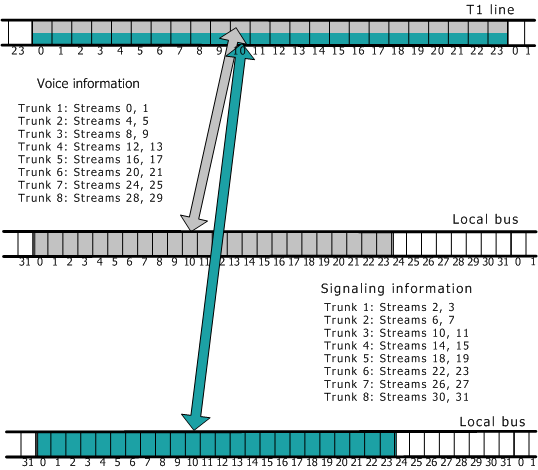
If NetworkInterface.T1E1[x].SignalingType = CAS (the default setting), voice and signaling information is routed to accommodate a T1 channel associated signaling configuration. Voice information is transmitted in each channel on the T1 trunk and each channel is placed in a corresponding timeslot on the local bus.
Signaling information is transmitted in each channel using robbed-bit signaling. The signaling information is broken out and placed on the corresponding signaling stream for that trunk. The signaling information for a given channel is placed in the same timeslot number as the voice information for that channel.
Note: The CG 6565 board does not allow signaling streams to be connected to the CT bus.
The following illustration shows how data is assigned to timeslots on a T1 trunk:
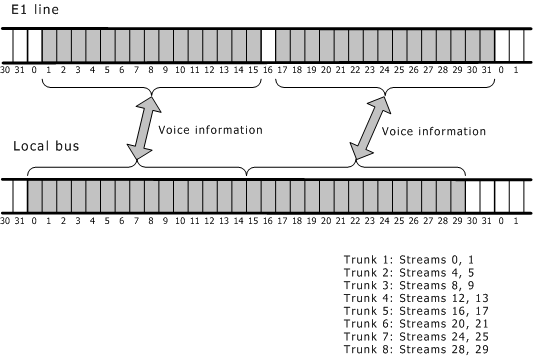
Regardless of the NetworkInterface.T1E1[x].SignalingType setting, the CG 6565 board routes voice information by assigning E1 timeslots 1 through 15 to the local bus timeslots 0..14. E1 timeslots 17 through 31 are assigned to the local bus timeslots 15..29. Timeslot 0 on the E1 line carries framing data.
The following illustration shows how voice channel data is assigned to timeslots:
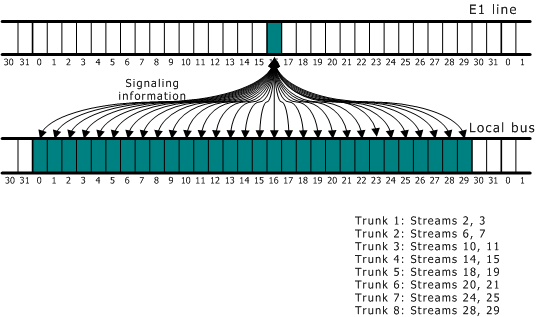
If NetworkInterface.T1E1[x].SignalingType = CAS (the default setting), signaling information is routed to accommodate channel associated signaling. Line channel 16 carries the signaling information for all channels.
Signaling information is broken out and placed on the corresponding signaling stream for that trunk. The signaling information for a given channel is placed in the same timeslot number as the voice information for that channel.
Note: The CG 6565 board does not allow signaling streams to be connected to the CT bus.
The following illustration shows how signaling data is distributed (although the streams are shown here, they cannot be switched to the CT bus):
If a board is configured for standalone operation (Clocking.HBus.ClockMode = STANDALONE), the DSPs and trunks are connected as shown in the following table.
Note: The SwitchConnections keyword can override this setting.
The exact settings for CG 6565 boards configured as T1 or E1 depend upon the setting of the NetworkInterface.T1E1[x].SignalingType keyword.
The Voice information and DSP resources table and the Signaling information and DSP resources table show the default routing for CG 6565 boards in CAS mode.
Trunk type |
Full duplex connection between the trunk voice information and the DSP resources... |
|
|---|---|---|
T1 |
Trunk 1: 0:0..23 => 65:0..23 Trunk 2: 4:0..23 => 65:24..47 Trunk 3: 8:0..23 => 65:48..71 Trunk 4: 12:0..23 => 65:72..95 Trunk 5: 16:0..23 => 65:96..119 Trunk 6: 20:0..23 => 65:120..143 Trunk 7: 24:0..23 => 65:144..167 Trunk 8: 28:0..23 => 65:168..191 |
64:0..23 => 1:0..23 64:24..47 => 5:0..23 64:48..71 => 9:0..23 64:72..95 => 13:0..23 64:96..119 => 17:0..23 64:120..143 => 21:0..23 64:144..167 => 25:0..23 64:168..191 => 23:0..23 |
E1 |
Trunk 1: 0:0..29 => 65:0..29 Trunk 2: 4:0..29 => 65:30..59 Trunk 3: 8:0..29 => 65:60..89 Trunk 4: 12:0..29 => 65:90..119 Trunk 5: 16:0..29 => 65:120..149 Trunk 6: 20:0..29 => 65:150..179 Trunk 7: 24:0..29 => 65:180..209 Trunk 8: 28:0..29 => 65:210..239 |
64:0..29 => 1:0..29 64:30..59 => 5:0..29 64:60..89 => 9:0..29 64:90..119 => 13:0..29 64:120..149 => 17:0..29 64:150..179 => 21:0..29 64:180..209 => 25:0..29 64:210..239 => 29:0..29 |
Trunk type |
Full duplex connection between trunk signaling information and the DSP resources... |
|
|---|---|---|
T1 |
Trunk 1: 2:0..23 => 67:0..23 Trunk 2: 6:0..23 => 67:24..47 Trunk 3: 10:0..23 => 67:48..71 Trunk 4: 14:0..23 => 67:72..95 Trunk 5: 18:0..23 => 67:96..119 Trunk 6: 22:0..23 => 67:120..143 Trunk 7: 26:0..23 => 67:144..167 Trunk 8: 30:0..23 => 67:168..191 |
66:0..23 => 3:0..23 66:24..47 => 7:0..23 66:48..71 => 11:0..23 66:72..95 => 15:0..23 66:96..119 => 19:0..23 66:120..143 => 23:0..23 66:144..167 => 27:0..23 66:168..191 => 31:0..23 |
E1 |
Trunk 1: 2:0..29 => 67:0..29 Trunk 2: 6:0..29 => 67:30..59 Trunk 3: 10:0..29 => 67:60..89 Trunk 4: 14:0..29 => 67:90..119 Trunk 5: 18:0..29 => 67:120..149 Trunk 6: 22:0..29 => 67:150..179 Trunk 7: 26:0..29 => 67:180..209 Trunk 8: 30:0..29 => 67:210..239 |
66:0..29 => 3:0..29 66:30..59 => 7:0..29 66:60..89 => 11:0..29 66:90..119 => 15:0..29 66:120..149 => 19:0..29 66:150..179 => 23:0..29 66:180..209 => 27:0..29 66:210..239 => 31:0..29 |